


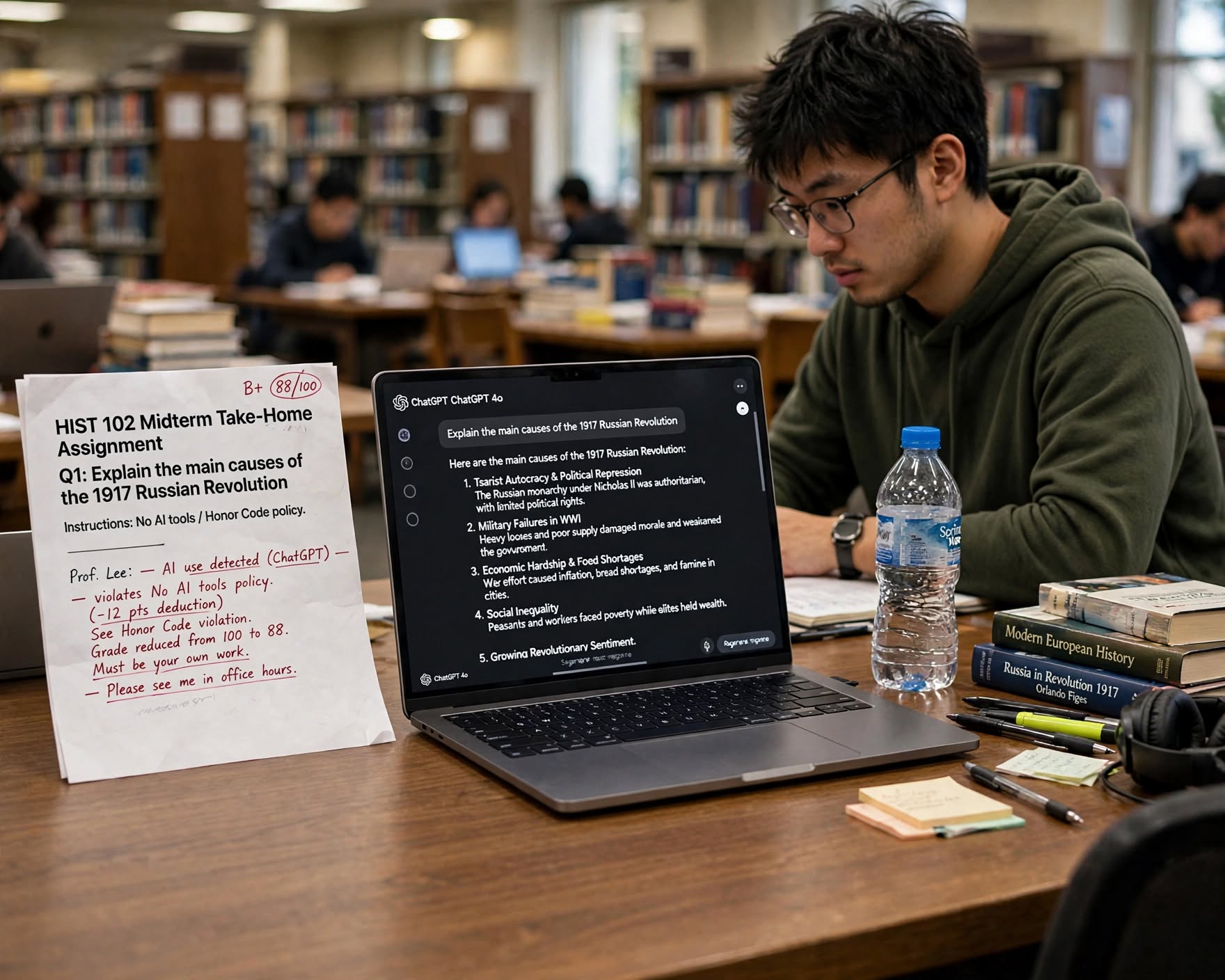


SAN FRANCISCO, CA – In a bold move to support academic mediocrity across college campuses, OpenAI has released ChatGPT-B+, a downgraded version of its popular AI chatbot specifically designed for students who just want to pass without attracting too much attention. The model promises “just enough effort to seem human, but not enough to raise suspicion.”
“Not every student is looking for a Pulitzer-level essay,” said OpenAI spokesperson Linda Averidge. “Some just want a paper that reads like it was written by a slightly tired 19-year-old who skimmed the reading while eating Hot Cheetos in bed. We listened.”
According to OpenAI, ChatGPT-B+ is engineered to mimic the classic signs of a well-meaning but deeply average student. The model produces half-formed arguments that trail off just before they get interesting, pads sentences with unnecessary filler like “In today’s modern society” and “Throughout history,” and occasionally cites a 2006 BuzzFeed article as a peer-reviewed source.
The model will also occasionally shift into first-person point of view halfway through the third paragraph for no apparent reason.
Early adopters are calling the new model “relatable,” “realistic” and “vaguely disappointing, in a good way.”
“My professor gave me an 85 and wrote ‘solid effort’ in the margin,” said Emily Tran, a sophomore communications major. “I haven’t felt this seen since I plagiarized myself from last semester.”
To further avoid suspicion, ChatGPT-B+ includes strategically placed typos that look like the student was simply rushing, a built-in option to quote the wrong book entirely and a setting that allows users to end their papers by copying the introduction and changing a few verbs.
OpenAI also assures users that ChatGPT-B+ cannot write above a B+ without crashing.
“We tried to force it into an A-range once, and it spontaneously added a meme and a Drake lyric,” said one developer. “We knew we had something special.”
For an additional $9.99 per month, users can unlock ChatGPT-B–, which replaces thesis statements with passive-aggressive personal anecdotes and refers to any philosopher as “that one guy.” A rumored C+ edition is also in development, primarily trained on group projects where only one person did the work.
University deans are divided on the release, with many admitting they’ve been grading AI-written papers for months without noticing.
“Honestly, I thought this was just how students wrote now,” said Dr. Andrew MacArthur of State College University. “I kind of appreciate the effort to dumb it down.”
At press time, OpenAI announced a companion app called TurnItInButMakeItVague, which helps rewrite AI-generated essays to pass plagiarism checkers by simply changing every third word to “society.”